Building a new home in Lake Travis offers exciting customization opportunities, but the design center experience can quickly become overwhelming. With builders like Drees Custom Homes, Scott Felder Homes, Pulte Homes, and Taylor Morrison presenting hundreds of upgrade options, knowing which selections to make during construction versus deferring until after closing can save you tens of thousands of dollars. Builders typically mark up upgrades by 20-100% over retail costs, but certain improvements are exponentially more expensive or nearly impossible to add later. Understanding what upgrades you should get from the builder versus adding after closing for your new build in Lake Travis helps you allocate your budget strategically while avoiding costly mistakes. In this blog post, real estate expert Dallas Seely discusses how to make smart upgrade decisions that maximize both your investment and lifestyle in Lake Travis communities.
Structural modifications, electrical and plumbing rough-ins, and energy efficiency upgrades should always be completed by the builder during construction, as retrofitting these elements after closing costs 2-5 times more and requires invasive demolition work. Cosmetic items like light fixtures, cabinet hardware, paint colors, and landscaping can typically be added more affordably after closing through independent contractors, allowing greater customization without paying builder premiums.
Key Takeaways
- Structural and behind-the-wall upgrades including additional square footage, electrical outlets, plumbing rough-ins, and enhanced insulation must be done during construction to avoid exponentially higher retrofit costs
- Energy efficiency improvements deliver long-term value in Austin’s climate and should be prioritized with the builder, including upgraded windows, HVAC systems, and insulation packages
- Cosmetic upgrades like lighting fixtures, cabinet hardware, paint, and landscaping are typically 30-60% cheaper when added after closing through local contractors
- Strategic timing and negotiation with builders, especially during optimal negotiation periods, can secure thousands in upgrade incentives or credits
To Discuss Your Home Sale or Purchase, Call or Text Today and Start Packing!
Builder vs. Post-Closing Upgrade Decision Guide
Strategic timing for new construction upgrades in Lake Travis
| Upgrade Category | Best Timing | Why This Timing | Cost Impact |
|---|---|---|---|
| MUST DO WITH BUILDER (During Construction) | |||
| Structural Changes | Builder Only | Additional square footage, extended patios, garage bays require foundation and framing work | 2-5x more expensive after closing |
| Electrical Rough-Ins | Builder Only | Extra outlets, ceiling fan wiring, EV charger circuits installed before drywall | 3-4x more expensive after closing |
| Plumbing Rough-Ins | Builder Only | Stub-outs for future bathrooms, outdoor kitchens, or wet bars before walls close | 3-5x more expensive after closing |
| Enhanced Insulation | Builder Only | Spray foam or upgraded insulation installed during framing, messy retrofit later | Incomplete coverage if added later |
| HVAC System Upgrades | Builder Only | Higher efficiency units, zoned systems integrate with ductwork during installation | Equipment replacement expensive |
| FLEXIBLE TIMING (Evaluate Case-by-Case) | |||
| Energy-Efficient Windows | Compare Pricing | Builder pricing often competitive; replacement later requires exterior work | Moderate savings if done later |
| Primary Flooring | Compare Pricing | Builder convenience vs. potential savings; disruption if installed post-closing | 10-30% savings possible after closing |
| Kitchen Countertops | Compare Pricing | Builder packages may include installation; independent fabricators offer more options | 20-40% savings possible after closing |
| Bathroom Tile Work | Usually Builder | Messy demolition and refinishing required for changes; convenience favors builder | Moderate savings if done later |
| BETTER AFTER CLOSING (Post-Move-In) | |||
| Light Fixtures & Fans | After Closing | Huge builder markup; vast selection at retail; simple installation | 40-70% savings after closing |
| Cabinet Hardware | After Closing | Extreme builder markup; easy DIY installation; unlimited style options | 50-70% savings after closing |
| Appliances | After Closing | Builder packages limited; holiday sales offer better pricing; standard hookups | 30-50% savings after closing |
| Paint Colors | After Closing | Builder charges premium for non-standard colors; unlimited options later | 40-60% savings after closing |
| Landscaping Details | After Closing | Builder subcontracts with markup; direct hire offers better value and customization | 40-60% savings after closing |
| Closet Systems | After Closing | Builder wire shelving basic; custom organizers offer superior functionality | 30-50% savings after closing |
Understanding the Builder Upgrade Decision
The fundamental question facing every new construction buyer centers on timing and cost-effectiveness. Builders bundle labor, warranties, and integration into their upgrade pricing, which creates convenience but also significant markup. In Lake Travis communities ranging from Rough Hollow to Sweetwater to The Hollows, builders charge premiums because they coordinate multiple trades, provide warranties on their work, and complete upgrades as part of the original construction process.
However, this convenience comes at a price. Most builders mark up materials and labor substantially compared to what you’d pay hiring independent contractors after closing. The critical distinction lies in understanding which upgrades involve structural or integrated work that becomes dramatically more expensive later, versus cosmetic changes that remain relatively simple to complete post-closing.
Working with a realtor experienced in new construction provides valuable guidance during this process. Buyer’s agents understand typical builder markups, know which upgrades deliver the best value, and can negotiate on your behalf to secure incentives or credits that offset upgrade costs.
The Texas Hill Country terrain adds unique considerations to upgrade decisions. Sloped lots common in Lake Travis require careful foundation and drainage planning. Limestone bedrock affects excavation costs for additions or modifications. Understanding these local factors helps you prioritize upgrades that work with your specific lot characteristics rather than against them.
Critical Upgrades to Get From the Builder
Structural and Layout Modifications
Any changes to your home’s footprint, size, or basic structure must occur during initial construction. Adding square footage, extending covered patios, expanding garages, or relocating walls becomes prohibitively expensive after framing is complete. The builder has equipment onsite, trades coordinated, and permits in process. Retrofitting structural changes later requires new permits, demolition of finished work, and coordination of multiple contractors.

In Lake Travis communities, lot-specific considerations influence structural decisions significantly. Homes on sloped terrain may benefit from raised foundations that provide better views or walkout basements that take advantage of grade changes. Properties with lake views should maximize window placement and orientation during framing. Corner lots or those backing to greenbelts might warrant expanded outdoor living areas that capitalize on privacy and views.
Higher ceilings and eight-foot doors create an immediate sense of luxury and openness that significantly impacts your daily experience and resale value. These architectural elements integrate into framing and cannot be changed without major reconstruction. If you’re considering these upgrades, include them in your initial builder contract rather than attempting to add them later.
Essential Structural Upgrades to Complete During Construction:
- Additional square footage or room additions – Foundation and framing changes cost 2-3x more after walls are closed
- Extended covered patios or outdoor living areas – Concrete work integrates with foundation pour and lot grading
- Garage expansions or additional bays – Structural modifications require coordination with foundation and roofing
- Higher ceilings (10-12 feet) – Architectural changes affect framing, HVAC, and electrical that cannot be modified later
- Window additions or relocations – Cutting into exterior walls post-closing requires extensive structural work and refinishing
Electrical and Plumbing Rough-Ins
Behind-the-wall systems represent the most critical category for builder upgrades. Once drywall closes your walls, adding electrical outlets, moving switches, or routing new plumbing lines requires cutting into finished surfaces, patching, repainting, and potentially replacing flooring. The disruption and expense multiply compared to installing these elements during rough-in stages.
Strategic electrical planning includes:
- Extra outlets in every room, particularly home offices, kitchens, and media areas
- Pre-wiring for ceiling fans even if you don’t install them immediately
- Dedicated circuits for major appliances and EV chargers
- Ethernet or conduit to every room for hardwired internet connections
- Outdoor outlet placement for holiday lighting, water features, or future additions
Austin’s tech-forward market means buyers prioritize smart home capabilities. Having infrastructure in place during construction costs a fraction of retrofitting later. Even if you don’t immediately install every smart device, the wiring and circuits should be ready when you do.

Plumbing rough-ins follow similar logic. Adding a future bathroom, wet bar, outdoor kitchen, or pool bath requires planning during initial construction. Running water lines and drain pipes through finished spaces costs exponentially more than installing stub-outs during framing. In Lake Travis real estate, outdoor plumbing for boat washing stations, dog showers, or garden irrigation proves particularly valuable.
“The biggest regret we hear from new construction buyers is not adding enough electrical outlets or pre-wiring for future needs. It costs maybe $200 per outlet during construction but $800-1,200 to add one after closing when you’re cutting into drywall, patching, repainting, and potentially replacing flooring. Always err on the side of too many outlets rather than too few.” – Dallas Seely
Energy Efficiency and HVAC Upgrades
Austin’s climate makes energy efficiency both a comfort issue and a financial consideration. Summers regularly exceed 100 degrees, placing enormous demands on cooling systems. Winters, while mild, can bring occasional freezes that test heating capacity. Upgrading insulation, windows, and HVAC equipment during construction delivers immediate utility savings and long-term value that buyers notice during resale.
Enhanced insulation in walls, ceilings, and floors creates a thermal envelope that reduces energy consumption year-round. Spray foam insulation provides superior performance compared to standard fiberglass, though at higher cost. This upgrade happens during framing and becomes messy and incomplete if attempted after walls are closed. The investment typically pays for itself through reduced utility bills within several years.
Energy-efficient windows with Low-E coatings and proper glazing reduce heat transfer while maximizing natural light. In Lake Travis homes designed to capture Texas Hill Country views, window upgrades particularly matter. Quality windows frame your vistas while keeping your home comfortable and your energy bills manageable.
HVAC system upgrades including higher-efficiency units, zoned temperature control, and advanced filtration improve both comfort and cost-effectiveness. Post-closing HVAC changes require removing and replacing major equipment, potentially modifying ductwork, and reconfiguring thermostats. Completing these upgrades during initial installation provides better integration and lower total cost.
High-Value Energy Upgrades for Austin Climate:
- Spray foam insulation – Superior R-value and air sealing reduces cooling costs by 20-30%
- Low-E windows with proper orientation – Reduces solar heat gain while maximizing natural light
- Radiant barrier roof decking – Reflects heat away from attic space, critical in Texas summers
- Zoned HVAC systems – Independent temperature control for different areas of your home
- High-efficiency HVAC (16+ SEER) – Lower monthly utility bills and improved home comfort
Smart Upgrades to Add After Closing
Cosmetic Finishes and Fixtures
Light fixtures, ceiling fans, cabinet hardware, and plumbing fixtures represent areas where builder markups prove particularly egregious. Builders offer limited selections at premium prices, while retail outlets provide vastly more options at lower costs. These items install quickly without affecting structural elements, making post-closing upgrades practical and cost-effective.
Cabinet hardware upgrades exemplify this strategy. Builders might charge $500-800 to upgrade from basic knobs to quality pulls and handles. Purchasing the same hardware retail and installing it yourself (or hiring a handyman for an hour) costs $150-300 total. The installation requires only a screwdriver and patience, with no special skills or tools needed.
Lighting fixtures follow similar economics. Builder “upgraded” lighting packages often include fixtures you could purchase at major retailers for half the price. Installation requires basic electrical knowledge or a licensed electrician for an hour or two, resulting in substantial savings compared to builder charges. This approach also provides access to current styles rather than being limited to builder design center offerings.
Paint colors represent another area where post-closing work makes financial sense. Builders charge premium prices for non-standard colors, while professional painters can repaint your entire home after closing for less money and with unlimited color options. Many buyers accept builder standard paint knowing they’ll customize colors once they move in.
Appliances and Kitchen Details
Major appliances typically carry substantial builder markups with limited selection. Builders partner with specific brands and offer predetermined packages that may not match your preferences or budget. Purchasing appliances independently provides access to holiday sales, scratch-and-dent discounts, and broader selection across all price points.
Most new homes include standard connections for refrigerators, ranges, dishwashers, and microwaves. Swapping builder-grade appliances for models you select separately causes no complications as long as dimensions and utility connections match. This strategy works particularly well if builder base packages include lower-tier appliances that you’d want to replace anyway.
Kitchen backsplashes offer another post-closing opportunity. While the builder should install your primary countertops and tile work during construction, decorative backsplashes can be added later at lower cost through tile contractors who specialize in this work. This approach allows you to live in your home, understand your kitchen’s lighting and feel, and then select backsplash materials that perfectly complement your space.
Flooring Considerations
Flooring decisions involve more nuance than most upgrade categories. Builder flooring packages often provide reasonable value, particularly for whole-house installations. However, quality and pricing vary significantly by builder and material type. In many cases, you can save money purchasing flooring independently and having it installed before you move in, but the savings prove less dramatic than with purely cosmetic upgrades.
The primary advantage of builder flooring lies in convenience and warranty coverage. The builder coordinates installation with other trades, ensures proper subflooring preparation, and warranties the work. Post-closing flooring installation requires moving in with unfinished floors, living through installation disruption, or delaying your move-in date.

For Lake Travis homes, durable and water-resistant flooring matters due to the lifestyle. Luxury vinyl plank (LVP) performs excellently near the lake where muddy shoes, wet swimsuits, and high traffic test flooring durability. If your builder offers quality LVP at competitive pricing, the convenience may outweigh modest savings from independent installation.
“Flooring sits in the middle ground between must-do-now and can-wait-later upgrades. We typically recommend comparing builder pricing against what local flooring contractors quote for the same materials. If the builder’s within 20% of independent contractor pricing, the convenience and warranty often make sense. Beyond that difference, post-closing installation starts looking attractive.” – Amy Seely
Landscaping and Outdoor Spaces
Basic grading, drainage, and foundation landscaping should be completed by the builder to ensure proper water management and lot preparation. However, detailed landscaping, plant selection, irrigation systems, and decorative elements typically cost significantly less when completed after closing through landscape contractors or nurseries.
Builders subcontract landscaping work and add substantial markup to coordinate these services. By working directly with landscape professionals after closing, you eliminate the middleman markup while gaining access to specialists who focus exclusively on outdoor design. This approach also allows you to observe your lot through different seasons, understand sun and shade patterns, and make informed decisions about plant selection and placement.
In Austin’s climate, native and drought-tolerant landscaping provides both aesthetic appeal and practical water conservation. Xeriscaping with native grasses, Texas sage, and other Hill Country plants requires less maintenance and irrigation than traditional landscaping. Local landscape professionals understand these considerations better than builders who may specify generic plant packages.
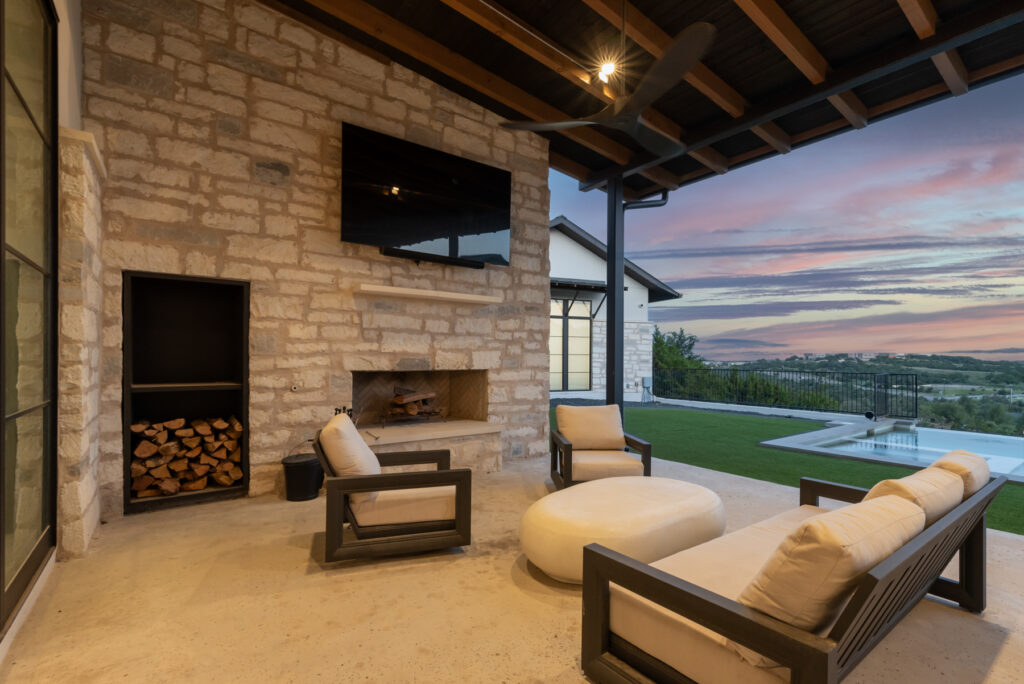
Outdoor kitchens, fire features, and elaborate hardscaping fall into a gray area. If these elements integrate with your home’s foundation or require gas and plumbing connections, completing them during initial construction makes sense. However, standalone features added to existing patios often cost less when constructed independently after closing.
Lake Travis Specific Considerations
Waterfront Property Upgrades
Homes with lake access or water views require different upgrade priorities than hill country properties without water features. Window placement and sizing become critical to maximize views. Outdoor living spaces deserve more investment since lake lifestyle revolves around outdoor entertaining. Materials selection should account for humidity and moisture exposure.
LCRA regulations govern waterfront modifications including docks, boathouses, and shoreline improvements. Understanding these restrictions helps you prioritize upgrades that work within regulatory frameworks. Some waterfront enhancements prove easier to complete during initial construction when equipment access is simpler, while others can be added anytime as separate projects.
Garage sizing matters more on waterfront properties where boat storage, water sports equipment, and lake lifestyle accessories require additional space. If you’re considering a larger garage or separate storage building, completing this work during initial construction integrates better with your lot’s grading and drainage plan.
Hill Country Terrain Challenges
Sloped lots common throughout Lake Travis require careful consideration of foundation work, retaining walls, and drainage systems. These structural elements must be completed during initial construction when heavy equipment is onsite and the builder coordinates with civil engineers. Attempting to add retaining walls or modify grading after closing becomes complicated and expensive.
Homes on sloped terrain benefit from strategic window and door placement that takes advantage of views and natural light. Walk-out basements or lower-level access works best when integrated into original design rather than retrofitted. The builder’s civil engineer plans drainage, erosion control, and structural support for sloped lots. Changes after closing require new engineering studies and potentially complicated modifications.
Outdoor living spaces on sloped lots may require extended foundations, deck structures, or terracing that costs less when completed during original construction. However, decorative elements and finishing touches for these spaces can be added later without affecting structural integrity.
Community-Specific Requirements
Lake Travis communities impose varying restrictions through HOA architectural review processes. Some neighborhoods require pre-approval for all visible changes including paint colors, roofing materials, and landscaping. Others provide more flexibility for post-closing modifications. Understanding your specific community’s rules influences which upgrades make sense during construction versus later.
Certain builders in specific communities offer package deals or incentives that dramatically affect upgrade economics. Builders sometimes provide thousands in upgrade credits for using their preferred lender or closing during specific periods. Negotiating strategically with these incentives can make builder upgrades more cost-effective than they’d otherwise be.
Waterfront Home Upgrade Priorities:
- Impact-resistant windows – Protection against storms while maximizing lake views
- Moisture-resistant materials – Tile, engineered hardwood, and sealed concrete for humid conditions
- Outdoor shower rough-ins – Essential for rinsing off after lake activities
- Covered outdoor living spaces – Year-round entertaining areas protected from sun and weather
- Marine-grade electrical outlets – Weather-resistant outdoor power for boat charging and equipment
Creating Your Upgrade Strategy
Budget Allocation Framework
Most new construction experts recommend allocating 5-15% of your base home price for upgrades, though this varies by starting point and personal preferences. In Lake Travis where base prices often exceed $600,000, this translates to $30,000-90,000 in potential upgrade spending. Strategic allocation focuses this budget on items that either cannot be changed later or provide exceptional value when completed during construction.
Priority one should always be structural and behind-the-wall items that become exponentially more expensive post-closing. This includes all electrical and plumbing rough-ins, structural modifications, and energy efficiency upgrades. These improvements often prove invisible to casual observers but provide enormous practical value and avoid future regret.
Priority two encompasses visible upgrades that significantly impact your daily experience and resale value. Kitchen countertops, bathroom tile, and primary flooring fall into this category. While these items could theoretically be changed later, doing so involves substantial disruption and expense. Getting them right during initial construction makes sense if budget allows.
Priority three includes cosmetic items that you’ll customize immediately after closing anyway. Rather than paying builder premiums for paint, lighting, and hardware you plan to change, accept builder standards and budget separately for post-closing customization. This strategy stretches your upgrade budget further while allowing greater personalization.
Strategic Budget Allocation for Lake Travis New Construction:
- 40-50% to structural and behind-the-wall – Electrical, plumbing, HVAC, insulation that cannot be easily changed
- 30-40% to high-impact visible upgrades – Kitchen countertops, flooring, primary bathroom features
- 10-15% to energy efficiency – Windows, insulation, HVAC efficiency that provides long-term savings
- 5-10% to outdoor living – Covered patios, outdoor kitchens if integrated with foundation work
- Reserve 10-20% for post-closing customization – Lighting, hardware, paint, landscaping you’ll personalize later
Timeline and Decision Points
Understanding when different upgrade decisions must be finalized helps you prepare and avoid rushed choices. Structural changes require earliest commitment, often before permits are issued. Electrical and plumbing rough-ins need finalization before framing is complete. Finish selections including flooring, countertops, and cabinetry typically have later deadlines but still require decisions weeks before installation.
Pre-drywall walkthroughs provide critical opportunities to verify that upgrades you selected are actually installed correctly. This inspection happens before walls close and represents your last chance to catch errors or changes without expensive corrections. Most builders schedule these walkthroughs automatically, but if yours doesn’t, request one as part of your purchase agreement.
The design center appointment represents your primary decision-making session. These appointments can feel overwhelming with hundreds of choices across dozens of categories. Preparing in advance by researching options, understanding your priorities, and prioritizing features for resale value helps you make confident decisions rather than feeling rushed or pressured.
Negotiation Opportunities
Builders provide most flexibility for negotiations during slower sales periods, at quarter-end or year-end when they need to meet targets, and when inventory sits unsold longer than expected. Understanding current market conditions in your specific Lake Travis community helps you gauge negotiation leverage. Your buyer’s agent should research recent incentives and comparable transactions to inform strategy.
Common negotiation points include closing cost credits that you can redirect toward upgrades, included upgrade packages that bundle popular items, and reduced pricing on specific inventory homes with builder-selected upgrades already installed. Sometimes builders offer better deals on completed homes with upgrades than letting you fully customize, particularly if those homes have been on the market for several months.
Builder-preferred lender incentives often provide substantial value if you’re comfortable using the builder’s mortgage company. These deals might include $10,000-20,000 in credits or paid closing costs that effectively subsidize upgrades. However, ensure the overall financing terms remain competitive, as a slightly higher interest rate could cost more over your loan’s life than the upfront credits provide.
Why Choose The Seely Group for Your New Construction Home Purchase
The Seely Group specializes in new construction representation throughout Lake Travis and brings insider knowledge that protects buyers from common pitfalls and costly mistakes. As former Sweetwater residents who built their own new construction home, Dallas Seely and Amy Seely understand the upgrade decision process firsthand, not just theoretically.
With hundreds of 5 star Google Reviews and recognition as Top 1% of Agents Nationwide by Realogy, The Seely Group delivers exceptional results through comprehensive buyer representation. Their established relationships with all major Lake Travis builders including Drees, Scott Felder, Pulte, and Taylor Morrison often result in better outcomes for clients, including upgrade incentives and responsive construction management.
The Seely Group guarantees personalized attention throughout your building journey, from initial builder selection through design center appointments, construction monitoring, and closing. Their deep knowledge of Lake Travis communities, builder reputations, and local market conditions ensures you make informed decisions that enhance both lifestyle and investment value. They accompany clients to design center appointments, review upgrade proposals for value and necessity, and negotiate on your behalf to maximize incentives.
As the top realtor in Austin for new construction guidance, The Seely Group’s expertise extends beyond simple transaction facilitation. They coordinate pre-drywall inspections, monitor construction quality, advocate for timely completion, and ensure punch-list items are resolved before closing. This comprehensive representation protects your interests throughout the complex new construction process.
To Discuss Your Home Sale or Purchase, Call or Text Today and Start Packing!
Frequently Asked Questions
Builder markup on upgrades typically ranges from 20-100% depending on the item category and specific builder. Cosmetic items like lighting fixtures, cabinet hardware, and appliances usually carry 40-70% markup, while structural work involving labor coordination may be marked up only 20-30%. The markup reflects the builder’s coordination costs, warranty coverage, and profit margin, but often significantly exceeds what you’d pay hiring contractors directly after closing.
Most builders prohibit outside contractors from working on your home during construction due to liability, warranty, and coordination concerns. You generally must choose either builder upgrades or standard builder finishes, then modify after closing. Some custom builders allow more flexibility, but production builders in Lake Travis communities typically maintain strict control over all work performed during construction. This restriction makes the builder-versus-post-closing decision even more critical.
Builder warranties typically remain valid for structural, electrical, plumbing, and HVAC systems even if you make cosmetic changes after closing. However, if your post-closing work affects warranted systems (such as cutting into walls to add outlets or modifying plumbing), the warranty coverage for those specific systems may be voided. Always review your warranty terms carefully and document all post-closing work with permits and licensed contractors to avoid potential disputes.
Stay Connected with The Seely Group
Stay connected with The Seely Group for the latest Austin and Lake Travis real estate insights, market updates, and luxury home showcases by following us on social media:
