If you own a home in Austin with a swimming pool built between 2017 and 2023, you may be dealing with one of Central Texas’s most challenging real estate issues: Alkali-Silica Reaction (ASR), commonly called “concrete cancer.” This widespread defect has affected hundreds, possibly thousands, of gunite pools in Travis and Williamson Counties, causing expansive cracking, structural failure, and significant financial distress for homeowners. While selling a house with an ASR-affected pool presents unique challenges, it’s absolutely possible with the right strategy, full disclosure, and expert guidance. In this blog post, Austin real estate expert Amy Seely discusses how to successfully sell a house in Austin, Texas with ASR, including your legal obligations, selling strategies, and how to maximize your home’s value despite this costly defect.
Yes, you can sell a house in Austin with an ASR-affected pool, but you must legally disclose this known material defect in writing and adjust your selling strategy accordingly. Your three main options are: repair or replace the pool before listing, sell “as-is” with a significant price reduction or buyer credit, or remove the pool entirely and sell the property without this liability.
Key Takeaways
- Texas law requires full written disclosure of known pool defects including ASR on the Seller’s Disclosure Notice, with failure to disclose potentially resulting in lawsuits for fraud or misrepresentation
- ASR repair costs typically range from $100,000 to $300,000+ for complete pool demolition and rebuild, significantly impacting home pricing strategies
- Professional documentation including structural engineer reports and contractor estimates is essential for legal protection and successful negotiations with buyers
- Multiple selling strategies exist (repair, credit, or removal) depending on your timeline, financial situation, and target buyer pool in the Austin market

Selling an Austin or Lake Travis home with an ASR-affected pool requires specialized expertise in disclosure laws, contractor coordination, and pricing strategies that most realtors simply don’t have. But Amy Seely has successfully guided 100s of Central Texas homeowners through this exact challenge, protecting their legal interests while maximizing sale prices despite this costly defect. As Austin’s #1 ranked CODA/ASL real estate agent and a top 1% agent nationwide with over 1,000 families served, Amy brings the deep Lake Travis market knowledge and construction defect experience you need to navigate ASR sales confidently. Don’t risk legal exposure or leave money on the table. Call Amy Seely today at 512.943.2572 for a complimentary consultation on your ASR property sale strategy.
To Discuss Your Home Sale or Purchase, Call or Text Today and Start Packing!
Understanding ASR: What “Concrete Cancer” Means for Your Pool
Alkali-Silica Reaction (ASR) is a chemical reaction that occurs when alkaline cement paste reacts with certain types of silica found in aggregate materials, creating an expansive gel that causes concrete to crack, spall, and eventually fail structurally. In Central Texas gunite pools, this defect is linked to concrete mixes that lacked fly ash or other pozzolanic materials during the 2017-2023 period when supply chain issues affected the construction industry.
Visible Signs of ASR Damage
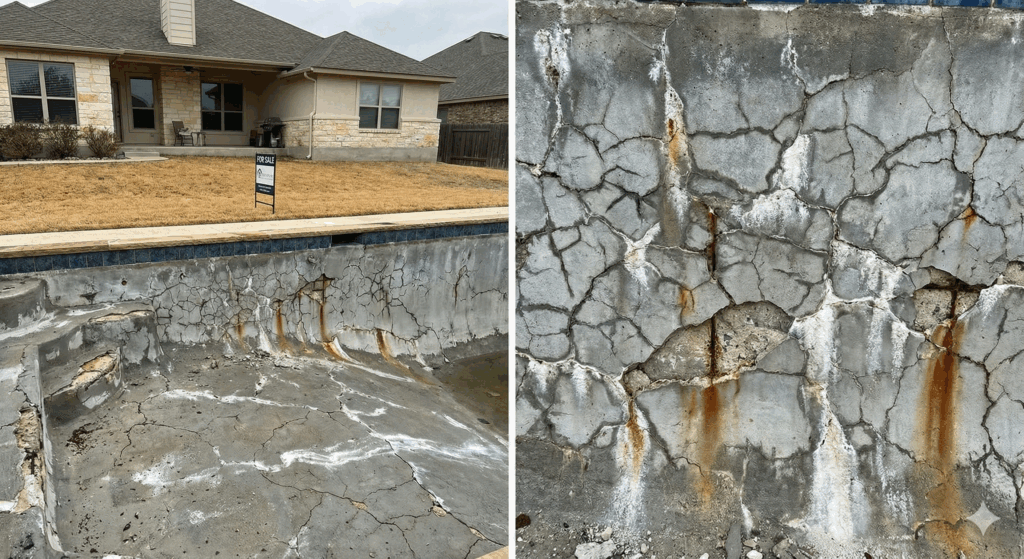
ASR-affected pools typically display distinctive symptoms that worsen over time. Random map-like cracking patterns appear across the pool shell, often accompanied by spalling where chunks of concrete break away from the surface. You may notice rust staining from exposed rebar, white powdery deposits or gel seeping from cracks, and excessive leaking that standard repairs cannot fix. The structural integrity of the pool progressively deteriorates, making it unsafe and unusable without major intervention.
Why ASR Became Widespread in Austin
During the 2017-2023 construction boom in Austin and surrounding areas, many pool contractors used concrete mixes from suppliers who eliminated fly ash due to supply shortages and cost pressures. This cost-cutting measure, combined with Central Texas’s reactive aggregate materials and climate conditions, created the perfect storm for widespread ASR development. Investigators and pool industry professionals estimate hundreds to thousands of affected pools across Travis and Williamson Counties, with some neighborhoods seeing ASR rates as high as 30-40% of pools built during this period.
ASR “Concrete Cancer” Timeline
From Construction Defect to Property Sale
Pools built in Austin during this boom period often lacked fly ash in the concrete mix, creating the chemical potential for ASR.
Moderate Severity: Initial “map cracking” or spiderweb patterns appear on the shell. Often mistaken for cosmetic plaster issues.
High Severity: Spalling (chunks breaking off), gel seepage, rust stains, and structural leaks. Integrity is compromised.
Homeowners must choose a path: 1. Full Repair (Rebuild), 2. Sell As-Is (Disclose & Credit), or 3. Pool Removal.
Your Legal Disclosure Obligations in Texas
Texas law provides clear requirements for sellers regarding property disclosures, and ASR-affected pools fall squarely within these mandatory disclosure rules. Understanding your legal obligations protects you from future liability while ensuring ethical treatment of potential buyers.
The Texas Seller’s Disclosure Notice
Texas Property Code Section 5.008 requires sellers of most 1-4 family residential properties to provide buyers with a written Seller’s Disclosure Notice detailing all known material defects. The standard form specifically asks about pools, spas, and related equipment, requiring you to disclose any known issues that could affect the property’s value or desirability.
For an ASR-affected pool, your disclosure must include a clear description of the problem. Rather than vague language like “pool has some cracks,” you should state: “Gunite pool likely affected by Alkali-Silica Reaction (ASR), commonly called ‘concrete cancer.’ Professional engineer inspection report attached showing structural cracking consistent with ASR. See attached contractor estimates for demolition and replacement costs.”
Why “As-Is” Sales Still Require Disclosure
Many sellers mistakenly believe that selling a property “as-is” eliminates their disclosure obligations. This is incorrect and potentially dangerous. While an “as-is” clause in your purchase contract means buyers accept the property in its current condition without requiring you to make repairs, it does not excuse you from disclosing known defects. Texas courts have consistently ruled that sellers cannot hide behind “as-is” language to avoid liability for failing to disclose material defects they knew about before the sale.
“The biggest mistake we see with ASR-affected pool sales is homeowners who think they can avoid disclosure by pricing low and selling ‘as-is.’ Texas law is crystal clear. You must disclose known material defects regardless of your selling strategy. Proper disclosure with documentation actually protects you legally and often leads to smoother negotiations because buyers appreciate transparency over surprises.” – real estate expert Amy Seely
Consequences of Non-Disclosure
Failing to disclose a known ASR problem can result in serious legal and financial consequences. Buyers who discover undisclosed ASR after closing can sue under the Texas Deceptive Trade Practices Act (DTPA), seeking not only the cost of repairs but also additional damages for deceptive practices. Courts may order rescission of the sale (forcing you to take the property back), award treble damages in cases of intentional deception, and require you to pay the buyer’s attorney fees. The financial impact of non-disclosure almost always exceeds the cost reduction you might have faced through honest disclosure.
Strategic Options for Selling Your Austin Home with ASR
The Seely Group understands that every homeowner’s situation is unique, requiring customized strategies based on your financial position, timeline, and market conditions. Here are the three primary approaches to selling an Austin home with an ASR-affected pool.
Option 1: Complete Pool Repair or Replacement Before Listing
This strategy involves demolishing the defective pool shell and rebuilding with ASR-resistant concrete containing fly ash or other pozzolanic materials. While this represents the highest upfront investment—typically $100,000 to $300,000 or more depending on pool size and features—it can provide the strongest return by eliminating the defect entirely.
Before pursuing this option, obtain detailed written estimates from at least two reputable Austin-area pool contractors experienced with ASR remediation. Ensure the new pool comes with a comprehensive warranty and uses certified ASR-resistant concrete mixes. Once completed, your disclosure should state: “Pool fully replaced in [year] due to ASR in original 2017-2023 construction. New pool built with ASR-resistant concrete. See attached warranties and documentation.”
Option 2: Sell “As-Is” with Price Reduction or Buyer Credit
Many Austin sellers choose to list their property at market value for a comparable home, then offer a substantial credit or price reduction equal to the estimated pool replacement cost. This strategy attracts buyers who want the property but prefer to control the pool replacement process themselves.
To implement this approach effectively, obtain at least two written estimates from licensed contractors for complete pool demolition and replacement. Use these estimates to justify your pricing adjustment in negotiations. In your listing remarks and marketing materials, clearly state: “Gunite pool affected by ASR (concrete cancer). Priced to reflect repair costs. See attached professional engineer report and contractor estimates for replacement.”
This approach typically appeals to buyers with renovation experience, investors, and those who were planning pool modifications anyway. Some buyers may prefer a pool design different from your existing layout, making this credit approach more attractive than a seller-completed replacement.
Option 3: Remove the Pool and Sell the Property
Complete pool removal—demolishing the structure and filling the area to create usable yard space—eliminates the ASR liability entirely. This option costs significantly less than replacement (typically $10,000 to $30,000 depending on pool size and site access) while broadening your potential buyer pool to include those who don’t want pool maintenance responsibilities.
Before removing a pool, check with the City of Austin or your municipality regarding required permits and inspection procedures. Some jurisdictions require documentation that the pool was properly demolished and filled to prevent future sinkhole risks. After removal, your disclosure should note: “Property previously had gunite pool, removed in [year] due to ASR defect. Area properly filled and landscaped. See attached permits and completion certificates.”
ASR Selling Strategies Comparison
Evaluate your options for selling a home with an affected pool
| Strategy | Repair / Replace | Sell “As-Is” | Pool Removal |
|---|---|---|---|
| Upfront Cost | $100,000 – $300,000+ | $0 (out of pocket) | $10,000 – $30,000 |
| Timeline to Sale | Long (Months for build) | Fast (Immediate) | Medium (Weeks) |
| Target Buyer | Retail Buyers & Families | Investors / Flippers | Non-pool seekers / Empty Nesters |
| Price Impact | None (Full Market Value) | Significant Price Cut | Modest Reduction |
| Legal Risk | Lowest (Defect Eliminated) | Medium (Requires Disclosure) | Low (Liability Removed) |
| Best For… | Maximizing final sale price | Owners with limited cash | Buyers who don’t want maintenance |
Documentation and Professional Assessments
Proper documentation is crucial for legal protection and successful negotiations when selling an Austin home with ASR. The Seely Group recommends assembling a comprehensive file before listing your property.
Essential Professional Reports
Commission a structural engineer inspection specifically focused on ASR diagnosis. These inspections typically cost $4,000 to $10,000 and may include core sampling to definitively confirm ASR presence through laboratory analysis. The resulting report provides independent, professional documentation that protects you legally and gives buyers confidence that the problem is understood, not hidden.
Obtain detailed written estimates from at least two licensed pool contractors for both demolition and replacement. These estimates should itemize costs for demo, haul-away, new pool shell construction, plumbing, equipment, and finishing. Having multiple estimates shows buyers you’ve done your homework and provides a reasonable basis for pricing negotiations.
Creating Your Disclosure Package
Assemble all documentation related to your pool including original construction contracts, permits, warranty information, and any repair attempts or correspondence with the original builder. Add your structural engineer report and contractor estimates to create a comprehensive disclosure package that you’ll provide to all prospective buyers.
This proactive disclosure approach demonstrates transparency and good faith, reducing the likelihood of future legal disputes. Many top realtors in Austin recommend attaching this documentation package directly to the MLS listing when permitted by your broker, ensuring all buyers have access to complete information before making offers.
“We’ve helped dozens of Austin homeowners successfully navigate ASR pool sales, and the pattern is consistent—those who invest in professional documentation upfront always achieve better outcomes. Buyers respect transparency, and written reports from structural engineers eliminate the ‘he said, she said’ dynamic that kills deals. The upfront cost of proper documentation is insurance against legal problems and failed negotiations down the line.” – real estate expert Amy Seely
Pricing Strategy for Maximum Value
Pricing an Austin home with an ASR-affected pool requires sophisticated analysis that goes beyond standard comparable sales. Amy Seely uses specialized valuation methods for properties with known defects.
Establishing Your Pricing Baseline
Start by determining your home’s value as if it had no pool or a fully functional, compliant pool. Your Austin real estate expert should provide comparable sales of similar homes in your neighborhood that either never had pools or have pools built outside the 2017-2023 ASR risk period. This establishes your baseline value before adjusting for the ASR defect.
Next, subtract the cost impact of the ASR issue based on your chosen selling strategy. If you’re offering an “as-is” credit, subtract the full estimated replacement cost plus a buffer for buyer uncertainty (typically an additional 10-15%). If you’re selling after pool removal, you may only need a modest reduction since some buyers prefer properties without pools.
Marketing Your Property Effectively
Work with The Seely Group to craft listing language that acknowledges the ASR issue transparently while emphasizing your home’s other strengths. Focus on location, schools, interior upgrades, lot size, and neighborhood amenities. Many successful ASR property sales in Austin emphasize the opportunity for buyers to design their dream pool exactly to their specifications.
Consider targeting specific buyer demographics more likely to see value despite the pool issue. These include investors and house flippers experienced with renovation projects, empty nesters who may prefer to eliminate pool maintenance entirely, buyers relocating to Austin who were planning extensive property modifications anyway, and cash buyers less constrained by lender requirements regarding pool condition.
Why Choose The Seely Group To Sell Your Austin Home with ASR
The Seely Group brings specialized expertise to the challenging situation of selling Austin homes with ASR-affected pools. As Austin luxury real estate specialists ranked in the Top 1% of Agents Nationwide by Realogy, Dallas Seely and Amy Seely have successfully guided numerous homeowners through this complex process.
Specialized ASR Market Knowledge
The Seely Group has deep experience with construction defect issues affecting Lake Travis real estate and the broader Austin market. This expertise includes understanding how ASR affects property values in different neighborhoods, knowing which buyer types are most receptive to ASR properties, navigating disclosure requirements and legal protections, and connecting you with qualified structural engineers and contractors for documentation.
The team’s comprehensive approach includes their proven 192-point marketing plan adapted specifically for properties with known defects, ensuring maximum exposure to qualified buyers who understand the opportunity.
Proven Success and Client Protection
With over 1000 families served and hundreds of 5 star Google Reviews, The Seely Group has established a track record of successful outcomes even in challenging situations. Their client-focused approach means treating you like family, providing honest guidance about realistic expectations while working tirelessly to achieve the best possible outcome for your specific circumstances.
Amy Seely is Austin’s #1 ranked CODA/ASL real estate agent in Central Texas, bringing additional expertise in serving diverse client needs. The team’s comprehensive knowledge of the Texas Hill Country and Lake Travis area means they understand not just the Austin urban market but also the unique dynamics of communities like Lakeway, Rough Hollow, Serene Hills, and Sweetwater where many ASR-affected pools exist.
To discuss your specific situation and develop a customized selling strategy for your Austin home with an ASR-affected pool, contact The Seely Group today at 512.943.2572. Their expertise in disclosure requirements, buyer negotiation, and legal protection can help you navigate this challenging situation successfully while maximizing your property’s value.
Frequently Asked Questions About Selling Houses with ASR in Austin
Proper disclosure significantly reduces your legal risk, though it doesn’t eliminate it entirely. If you provide complete written disclosure on the Texas Seller’s Disclosure Notice, attach professional inspection reports documenting the ASR condition, and give buyers access to contractor estimates for repair costs, you’ve met your legal obligations. Buyers who purchase with full knowledge and documentation of the ASR issue have much weaker grounds for future claims. However, you should still consult with a Texas real estate attorney to review your disclosure language before listing. The Seely Group works closely with experienced real estate attorneys who can ensure your disclosures provide maximum legal protection while facilitating successful sales.
Stay connected with The Seely Group for the latest Austin and Lake Travis real estate insights, market updates, and luxury home showcases by following us on social media:
- Instagram: @theseelygroup – Stunning property photos, behind-the-scenes content, and Austin lifestyle highlights
- LinkedIn: The Seely Group – Professional market analysis, industry insights, and real estate expertise
- YouTube: @theseelygroup – Virtual home tours, neighborhood guides, and expert real estate advice
- Facebook: The Seely Group – Community updates, client success stories, and local Austin area news
- TikTok: @the.seely.group
- Yelp: The Seely Group
- The Seely Group Google Business Profile
- Dallas Seely Google Business Profile
- Amy Seely Google Business Profile
- Amy Seely Yelp
